Thursday, March 24, 2016
Thread Protectors & Your Company's Bottom Line
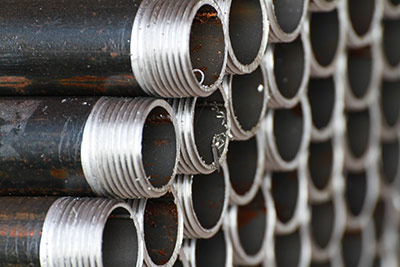
In the oil and gas industry, metal piping is used, installed or transported by many businesses. Threads are typically attached to both ends of these heavy pipes, and thread protectors can be used to safeguard them from damage. Thread protectors are essentially rugged caps that can be screwed onto pipe threads before the piping is transported or stored. The surfaces are also kept clean and dry when the threads are covered and filled.
Preventing thread damage during transportation or storage helps to keep costs low. The most economical and effective solution is provided by thread protectors. Made from plastic, tough rubber, polyurethane or steel, the protector reinforces pipe ends and provides coverage for the threading. This helps the piping to withstand harsh treatment and unfavorable conditions. It also safeguards against corrosion when the pipes are moved, cleaned, or placed in storage. Additionally, it ensures the proper functioning of the threading.
Monday, March 7, 2016
Using Drill Pipe Protectors To Keep Your Products Safe
Tuesday, February 16, 2016
The Benefits Of Oil Country Tubular Goods (OCTG)
Oil Country Tubular Goods (OCTG) are a necessary component for productive oil and gas wells. Oil is the most popular source of energy in the world, and in order to gather this resource, OCTG are required. OCTG are used for drilling, to transporting the oil from the wellbore to the surface.
As exploration for fossil fuels continues globally, the demand for OCTG is growing. They are required for exploration and remain a necessity once production begins. Using quality oil country tubular goods will mean that oil is being captured productively, without any waste. Similarly, it will ensure the safety of both the oil workers and the environment.
The three main components of OCTG are:
- Drilling Pipe - This is a long, seamless tube which drives the process by rotating the drill bit, and boring into the well source. This is placed under immense pressure and force.
- Casing Pipe - This lines the borehole and is a vital component in supporting the oil well so that it does not collapse due to the external rock pressure, or the internal fluid tension of the pumped gas or oil. It is an essential component for ensuring the productivity and efficiency of the well, and the safety of the surrounding environment and workers.
- Tubing - This piping is used to transport the oil or gas up from the well source to the surface. Again, this pipe is essential to capturing oil, or gas, economically- while ensuring environmental and worker security.
All of these components of Oil Country Tubular Goods are placed under incredibly high pressure. Similarly, it is vital that these parts are corrosive resistant; thereby ensuring they do not weaken. However, with the right OCTG, harvesting oil or gas can be both an economical and secure procedure, with minimal resource losses and harm to the surrounding environment and workforce.
Monday, November 30, 2015
Choosing The Best Oilfield Equipment Manufacturer
An oilfield is a potential minefield of safety complications and environmental hazards. As project overseer, you have a responsibility to ensure that products are well chosen to appease investors and environmental lobbyists. What is your strategy for selecting oilfield equipment wisely when the competition is fierce? Here are some guidelines.
One: Ratings and Reputation
Forget product ratings for a minute and start with the company in question. Examine what industrial clients in your field have said about this firm in recent months or years. Find out how long they have been in business: longevity is a reflection of professionalism and reputation. No industrial equipment supplier will last long if their reputation is tarnished.Two: Innovation and Environment
A firm in the oilfield equipment business had better be striving to meet higher environmental standards than ever before. There is tremendous animosity towards this industry from environmentalists. Meanwhile, the reasons for their strong feelings and the need for conservation/protection are well understood and frequently documented. Check out what equipment supply firms have to say about this topic and find out what efforts they are making to improve preservation and safety to wildlife and habitat.Three: Guarantees and Warranties
Companies that are proud of their equipment stand behind it. They willingly provide extensive warranty on their products as long as you register each purchase. Moreover, if you are talking about machinery rather than parts, they should be willing to send staff members out to wherever you are and demonstrate items so you can see for yourself how machines will run in their intended settings. Confident companies will go to this expense and trouble.Four: Common Sense
All of the factors above are moot if the firm selling oilfield equipment isn't certified. Check licenses and also certification on equipment. It should all carry documentation proving machines passed inspections. This is more important than competitive rates or impressive websites: safety comes first.Tuesday, September 8, 2015
What are Tubular Packaging Systems?
Tubular packaging systems are highly advanced robotic devices that can package materials. The main job of a tubular packing system is to stack packages. The machine uses one of two types of pickup attachments to perform its tasks. The unit uses a magnetic or a vacuum device to pick up the materials. Tubular packing systems usually come with pre-configured programming so that they can handle a wide variety of sizes, shapes, and patterns. Business owners can accomplish a great deal by investing in a tubular packing system today.
Some of the most common items that have to go into tubular containers are meats and cookie dough. Other items that may go into a tubular package are tennis balls, beauty products, yarn, cookies, lipsticks, lotions and more. The tubular packaging system prepares such items so that store owners can put them on the shelves for the public. The system can package the above-stated items quickly and efficiently so businesses can stay stocked with popular items.
Furthermore, the newest tubular packing systems are designed with a high level of accuracy. The quality that one of the state-of-the-art packaging systems provides never fails nor falters. Businesses need consistency in their high-volume activities, which is why many of them are turning to robotic assistance.
Some of the most common items that have to go into tubular containers are meats and cookie dough. Other items that may go into a tubular package are tennis balls, beauty products, yarn, cookies, lipsticks, lotions and more. The tubular packaging system prepares such items so that store owners can put them on the shelves for the public. The system can package the above-stated items quickly and efficiently so businesses can stay stocked with popular items.
The Many Benefits of Buying Tubular Systems
Many benefits exist to purchasing a tubular packing system for a busy establishment. The main benefit of investing in such a system is the increased productivity. Tubular packing systems do not grow tired, and they can handle large workloads. They can save space with their compact designs, as well.Furthermore, the newest tubular packing systems are designed with a high level of accuracy. The quality that one of the state-of-the-art packaging systems provides never fails nor falters. Businesses need consistency in their high-volume activities, which is why many of them are turning to robotic assistance.
The Price of Tubular Packaging Systems
The price of a tubular packaging system will vary according to the complexity of the device. An interested business owner can obtain pricing estimates from an equipment specialist.Tuesday, August 11, 2015
Problems With Drillpipes In Oil And Offshore Rigs
When oil rigs and offshore oil rigs are drilling wells, there are bound to be some problems with the piping along the way. Drilling problems are expensive. Anticipating and understanding piping complications, their causes, and planning solutions, are imperative for cost control, and ultimately effectively hitting the target zone. This article addresses two major problems with drill pipes.
Pipe- Sticking
During the drilling procedure, a drill pipe is deemed stuck, if it is impossible to free and pull out of the hole, without doing damage to the pipe, or without overreaching the maximum hook load on the drilling rig. Mechanical and differential are the two different kinds of p. sticking.Differential Pressure Pipe-Sticking
Differential pressure pipe-sticking is defined as, when a section of the drill string is surrounded with a mudcake; which forms on the pipe's wall of a porous growth while drilling. If the mudpressure grows on the outer wall of the pipe, and is more than the fluid pressure of the formation, then the pipe is considered to be differentially stuck. Some indicators of differential pipe-sticking, while drilling in depleted pressure or porous areas are; not being able to return the drill string, -sometimes while rotating it, or during uninterrupted fluid circulation of the drill or an increase of drag and torque.Mechanical
The causes of mechanical sticking, are as follows: inadequately removing previously drilled cuttings from the annulus, and instabilities of the borehole, such as:- Sloughing
- Hole caving
- Collapse
- Plastic shale
- Salt sections creeping or squeezing.
- Key seating.
Drillpipe Failures
Drillpipe failures can be classified into one of the following:- Fatigue - due to mechanical cyclic loads- which may or may not have any corrosion.
- Collapsing or bursting - due to too much external or internal pressure.
- Parting - due to too much tension.
- Twistoff - due to too much torque
Tuesday, July 28, 2015
Pros Of Using Thread Protectors
Using thread protectors is extremely important when installing pipes in the oil and gas industry. These kinds of protectors can prevent difficult situations from happening, and save money and time. They safeguard the threads that are found on the end of pipes during transportation and storage.
The protectors keep away any pests, dirt, and dust that can surface while they are being transported or stored. They are typically made of plastic or steel; and using thread protectors significantly reduces the amount of delays and downtime on the job. In addition, they can help your operation run more properly and professionally.
Not only are damaged pipes potentially dangerous, they can also cause financial setbacks. Investing in these protectors, and otherwise ensuring that the system is handled properly, ensures the safe passage of pipes to the job site. The pitfalls of dangerous situations and delays can be avoided by simply using pipe protection technology.
In the oil and gas industry, thread protectors play a very instrumental role. They safeguard the pipes against harsh weather conditions that typically exist at oil drilling sites, as well as withstand rough handling by field workers. As it becomes necessary to store pipes for extended periods of time before using them, protectors can keep them from damage during storage periods. Similar to the protection technology used in the water industry, your oil business could save a lot of money by making an initial investment into these protective devices. Most importantly, they ensure the safe operation of the site.
Thread protectors are a necessary technology for individuals working in the oil and gas industry. Safeguarding the pipes utilized in these types of businesses is vital to consistently, safely, and efficiently providing sound products. At the same time, safety, cleanliness, and orderliness cannot be overemphasized in these industries. Pipe protection technology is necessary in achieving a reliable and smooth-running operation.
Subscribe to:
Posts (Atom)