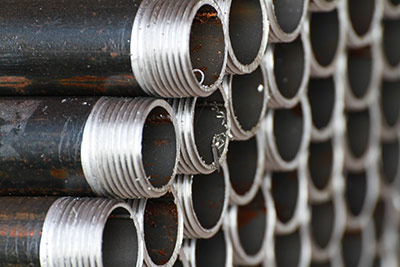
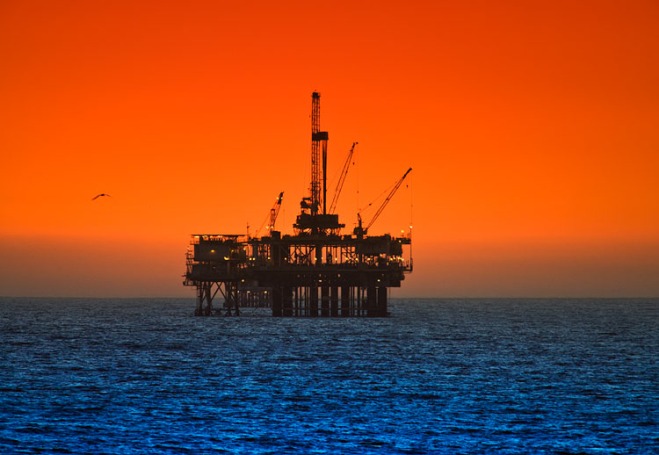
An oilfield is a potential minefield of safety complications and environmental hazards. As project overseer, you have a responsibility to ensure that products are well chosen to appease investors and environmental lobbyists. What is your strategy for selecting oilfield equipment wisely when the competition is fierce? Here are some guidelines.
Monday, November 30, 2015
Choosing The Best Oilfield Equipment Manufacturer
An oilfield is a potential minefield of safety complications and environmental hazards. As project overseer, you have a responsibility to ensure that products are well chosen to appease investors and environmental lobbyists. What is your strategy for selecting oilfield equipment wisely when the competition is fierce? Here are some guidelines.
Tuesday, September 8, 2015
What are Tubular Packaging Systems?
Tubular packaging systems are highly advanced robotic devices that can package materials. The main job of a tubular packing system is to stack packages. The machine uses one of two types of pickup attachments to perform its tasks. The unit uses a magnetic or a vacuum device to pick up the materials. Tubular packing systems usually come with pre-configured programming so that they can handle a wide variety of sizes, shapes, and patterns. Business owners can accomplish a great deal by investing in a tubular packing system today.
Some of the most common items that have to go into tubular containers are meats and cookie dough. Other items that may go into a tubular package are tennis balls, beauty products, yarn, cookies, lipsticks, lotions and more. The tubular packaging system prepares such items so that store owners can put them on the shelves for the public. The system can package the above-stated items quickly and efficiently so businesses can stay stocked with popular items.
Furthermore, the newest tubular packing systems are designed with a high level of accuracy. The quality that one of the state-of-the-art packaging systems provides never fails nor falters. Businesses need consistency in their high-volume activities, which is why many of them are turning to robotic assistance.
Some of the most common items that have to go into tubular containers are meats and cookie dough. Other items that may go into a tubular package are tennis balls, beauty products, yarn, cookies, lipsticks, lotions and more. The tubular packaging system prepares such items so that store owners can put them on the shelves for the public. The system can package the above-stated items quickly and efficiently so businesses can stay stocked with popular items.
The Many Benefits of Buying Tubular Systems
Many benefits exist to purchasing a tubular packing system for a busy establishment. The main benefit of investing in such a system is the increased productivity. Tubular packing systems do not grow tired, and they can handle large workloads. They can save space with their compact designs, as well.Furthermore, the newest tubular packing systems are designed with a high level of accuracy. The quality that one of the state-of-the-art packaging systems provides never fails nor falters. Businesses need consistency in their high-volume activities, which is why many of them are turning to robotic assistance.
The Price of Tubular Packaging Systems
The price of a tubular packaging system will vary according to the complexity of the device. An interested business owner can obtain pricing estimates from an equipment specialist.Tuesday, August 11, 2015
Problems With Drillpipes In Oil And Offshore Rigs
When oil rigs and offshore oil rigs are drilling wells, there are bound to be some problems with the piping along the way. Drilling problems are expensive. Anticipating and understanding piping complications, their causes, and planning solutions, are imperative for cost control, and ultimately effectively hitting the target zone. This article addresses two major problems with drill pipes.
Pipe- Sticking
During the drilling procedure, a drill pipe is deemed stuck, if it is impossible to free and pull out of the hole, without doing damage to the pipe, or without overreaching the maximum hook load on the drilling rig. Mechanical and differential are the two different kinds of p. sticking.Differential Pressure Pipe-Sticking
Differential pressure pipe-sticking is defined as, when a section of the drill string is surrounded with a mudcake; which forms on the pipe's wall of a porous growth while drilling. If the mudpressure grows on the outer wall of the pipe, and is more than the fluid pressure of the formation, then the pipe is considered to be differentially stuck. Some indicators of differential pipe-sticking, while drilling in depleted pressure or porous areas are; not being able to return the drill string, -sometimes while rotating it, or during uninterrupted fluid circulation of the drill or an increase of drag and torque.Mechanical
The causes of mechanical sticking, are as follows: inadequately removing previously drilled cuttings from the annulus, and instabilities of the borehole, such as:- Sloughing
- Hole caving
- Collapse
- Plastic shale
- Salt sections creeping or squeezing.
- Key seating.
Drillpipe Failures
Drillpipe failures can be classified into one of the following:- Fatigue - due to mechanical cyclic loads- which may or may not have any corrosion.
- Collapsing or bursting - due to too much external or internal pressure.
- Parting - due to too much tension.
- Twistoff - due to too much torque
Tuesday, July 28, 2015
Pros Of Using Thread Protectors
Using thread protectors is extremely important when installing pipes in the oil and gas industry. These kinds of protectors can prevent difficult situations from happening, and save money and time. They safeguard the threads that are found on the end of pipes during transportation and storage.
The protectors keep away any pests, dirt, and dust that can surface while they are being transported or stored. They are typically made of plastic or steel; and using thread protectors significantly reduces the amount of delays and downtime on the job. In addition, they can help your operation run more properly and professionally.
Not only are damaged pipes potentially dangerous, they can also cause financial setbacks. Investing in these protectors, and otherwise ensuring that the system is handled properly, ensures the safe passage of pipes to the job site. The pitfalls of dangerous situations and delays can be avoided by simply using pipe protection technology.
In the oil and gas industry, thread protectors play a very instrumental role. They safeguard the pipes against harsh weather conditions that typically exist at oil drilling sites, as well as withstand rough handling by field workers. As it becomes necessary to store pipes for extended periods of time before using them, protectors can keep them from damage during storage periods. Similar to the protection technology used in the water industry, your oil business could save a lot of money by making an initial investment into these protective devices. Most importantly, they ensure the safe operation of the site.
Thread protectors are a necessary technology for individuals working in the oil and gas industry. Safeguarding the pipes utilized in these types of businesses is vital to consistently, safely, and efficiently providing sound products. At the same time, safety, cleanliness, and orderliness cannot be overemphasized in these industries. Pipe protection technology is necessary in achieving a reliable and smooth-running operation.
Tuesday, June 23, 2015
Drill Pipe Purchase and Maintenance Tips
Drill pipes are convenient tools that are commonly used in directional drilling projects. This equipment is not inexpensive though, with some pipes costing tens of thousands of dollars (based on the specification and size). This is why doing your homework before buying a pipe, and taking good care of it after you buy it, is essential.
Drill pipes come in many different shapes and sizes. Types of models on the market include the press and fit variety; along with the more popular integral forged pipes. When purchasing a drill pipe, some people consider little more than the price. However, grueling conditions can diminish the pipe's strength. If you buy a cheap pipe that is low in quality, you increase the likelihood of encountering difficulties during your project.
Indeed, it is crucial to buy a pipe that is of the correct grade. A poor quality pipe causes significant fatigue resistance. This is a key factor when it comes to drilling, because the pipe's torque limits are tested to their maximum. Furthermore, when you drill horizontally, there are many cyclical forces that come into play.
You should always ensure that the drill pipe you buy has the required strength for the specific rig or purpose you have in mind. As well as taking into account the power of the rig, you should bear in mind what type of rig you want to use the pipe with. If you purchase a pipe that is the wrong size for the rig you use, then you run the risk of experiencing various difficulties; and in turn, wasting your investment funds.
Regular maintenance will prolong the lifespan of your drill pipe. Cleaning and inspecting the rod frequently is highly recommended. Also, the drill rods inside your rod basket should be rotated. This way, as different rods will be put into the ground initially, they wear evenly.
Tuesday, June 2, 2015
Protecting Pipe Investments: Pipe Protection
In the world of oil country tubular goods it is important to treat pipes as investments, taking proper care to inspect pipe throughout the whole drilling process and make sure they are protected.
Pipe problems in rigs and wells can lead not only to costly repairs and leakage, but also oil or water damage. It is important to become familiar with any potential problems to take the protection and precautionary measure to prevent any damages.
Here are several types of issues that can occur in any pipeline project:
Corrosion
Corrosion is a common issue in the piping world, especially for copper pipes. One of the most frequent issues with copper is when the grounding and connection between the pipe corrode. Because the grounding is usually made from iron or steel it makes corrosion more frequent which can in turn, cause leaks underground which can go undetected for weeks, even months.
Freezing Pipes
Pipes that contain well water are especially vulnerable to freezing in cold climates if they are not buried properly or deep enough. Because copper pipes conduct heat and cold, it is recommended to avoid using copper pipes in water wells and certain oil rigs. Heat and cold in the soil is often transferred to underground pipe systems which can burst depending on the temperature. By burying the pipes to the proper depth. Installing steel pipe thread protectors is also a great way to mitigate any freezing that might occur in pipe located in colder climates.
Temperature Problems
In addition to freezing, there are some pipes that offer poor temperature resistance and are vulnerable to springing leaks when they break down. This usually happens when pipes are subjected to hot or cold temperatures over long periods of time. Sometimes the materials (Polybutylene for example) the pipes are constructed with provide poor resistance to light, certain chemicals and extreme temperatures.
Noisy Pipes
Though not as severe as corrosion or freezing, there are times when well and rig pipes cause constant rattling and "squealing" on a frequent basis. Any squealing, rattling, shaking or pounding noises happen when the pipe flow is interrupted by closing any plumbing closures. It may be necessary to repair the water happens by installing either hammer arresters or steel pipe thread protectors.
Joints Leak
Certain sections of underground pipes in wells and rigs are jointed and because the joints are weaker spots, there are times when leaks can spring. If pipes are experiencing any leaking, it can often be prevented by installing longer stretches of soft copper wire (instead of shorter ones) to prevent any leaking.
Solder
One of the most important things to monitor is testing water pipes for lead. Soldering copper pipes can allow lead to leak into the water in the pipes. The only way to determine if lead was used for the pipe solders is to dig up the entire line costing time and resources. Test frequently for lead and have future pipes soldered with silver instead of lead.
In any piping project, it is important to monitor any potential problems that may arise in the pipes. Fortunately, there are strategies and tools to help reduce any issues with piping and ways to correct the issues that happen.
If you would like more information on how to make sure your pipe projects are safe and secure, contact us to get a complete list of products and providers that are trusted and can help!
In any piping project, it is important to monitor any potential problems that may arise in the pipes. Fortunately, there are strategies and tools to help reduce any issues with piping and ways to correct the issues that happen.
If you would like more information on how to make sure your pipe projects are safe and secure, contact us to get a complete list of products and providers that are trusted and can help!
Friday, May 29, 2015
Offshore Rig Safety
Most people tend to associate ocean endeavors with high risks and adventurous dangers at the high sea, but in the oil and gas industry, surprisingly studies have shown that offshore rigs rigs are typically safer with reduced accidents and perform better at safety inspections than their on land counterparts.
One of the primary reasons that deepwater rigs frequently perform better on safety inspections with reduced accidents is the personnel manning their respective rigs. Studies have shown that offshore rigs tend to be manned by workers that have been at their positions and locations longer. This familiarity by personnel that have been in a single location helps breed job familiarity and professional competence by a staff that has spend most of their time in a set location and will be familiarized with their duties and roles.
In addition to the personnel manning offshore rigs, after the Deepwater Horizon events, there has been more safety and security efforts on platforms across the coast. To avoid costly accidents that can be harmful from an environmental, financial and PR standpoint, companies have become more rigorous in their efforts to maintain deepwater rig safety.

Because of the cost and time needed to complete just the construction of offshore rigs, they tend to be viewed more as long term investments, rather than projects. This makes offshore platforms more immune to the thinner margins of land-based rigs that are incentivized to build fast and drill even faster. Companies tend to be more patient with the construction and extraction of offshore rigs. Safety, unfortunately often takes a backseat to the speed of a drilling projects completion due to their thinner operating margins.
Safety is a crucial element of keeping rig operations running smoothly and efficiently. Having experienced, dedicated and knowledgable crews will help operate offshore platforms safely and profitably. While on site safety is paramount to any drilling endeavor, it is also important to consider safety and the equipment that will help your operations. Protecting investments includes your pipe protection, personnel and location.
Subscribe to:
Comments (Atom)